
The Institutional Legacy of U Thant: Architect of the UN Development System
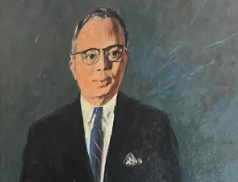
U Thant, the third Secretary-General of the United Nations (1961–1971), presided over a transformative era for the UN. He moved the organization’s focus beyond peacekeeping and decolonization toward a robust global architecture for development and environmental stewardship.
The following list details the key organizations and institutions established or formally institutionalized during his tenure:
Major Agencies and Programmes
- UNCTAD (United Nations Conference on Trade and Development) – 1964
- Established to address the concerns of developing nations regarding international trade and to facilitate their integration into the global economy. It remains a primary voice for the Global South.
- UNDP (United Nations Development Programme) – 1965
- Formed by the merger of the Expanded Programme of Technical Assistance (EPTA) and the United Nations Special Fund.
- U Thant spearheaded this consolidation to create a more efficient global development network.
- UNIDO (United Nations Industrial Development Organization) – 1966
- Created to promote and accelerate industrial development in developing countries and to coordinate industrial activities within the UN system.
- UNFPA (United Nations Population Fund) – 1969
- Launched initially as the Trust Fund for Population Activities, U Thant was instrumental in recognizing the link between population dynamics and sustainable development.
- WFP (World Food Programme) – 1965
- While it began as a three-year experimental pilot in 1961 (under Dag Hammarskjöld), U Thant oversaw its formal establishment as a permanent UN programme in 1965.
- UNV (United Nations Volunteers) – 1970
- Created by the General Assembly under U Thant’s guidance to provide an avenue for professionals to contribute directly to development projects on the ground.
Research and Training Institutions
- UNITAR (United Nations Institute for Training and Research) – 1963
- Founded to enhance the effectiveness of the UN through appropriate training and research, specifically for diplomats from newly independent states.
- UNRISD (United Nations Research Institute for Social Development) – 1963
- Established to conduct multidisciplinary research on the social dimensions of contemporary development problems.
- UNU (United Nations University) – Proposed 1969
- U Thant formally proposed the creation of a “United Nations University” in 1969 to serve as a global academic bridge. While it was formally established in 1973 (shortly after his term), it is widely considered his “intellectual brainchild.”
Key Institutional Legacy
- The United Nations Environment Programme (UNEP)
- While formally established in 1972 following the Stockholm Conference, U Thant was the visionary who laid the groundwork. His 1969 report, Problems of the Human Environment, was the catalyst that put environmental protection on the UN’s permanent agenda.
- The First and Second UN Development Decades
- U Thant institutionalized the concept of “Development Decades,” creating the frameworks that shifted the UN’s core mission toward bridging the North-South divide through specific economic targets. Though not a UN agency, it is also worth noting his pivotal role in stabilizing and expanding the United Nations International School (UNIS), where he served as the Chairman of the Board of Trustees, viewing it as a vital laboratory for international cooperation.


